

Open Hours: Mon - Fri 8.00 am - 6.00 pm
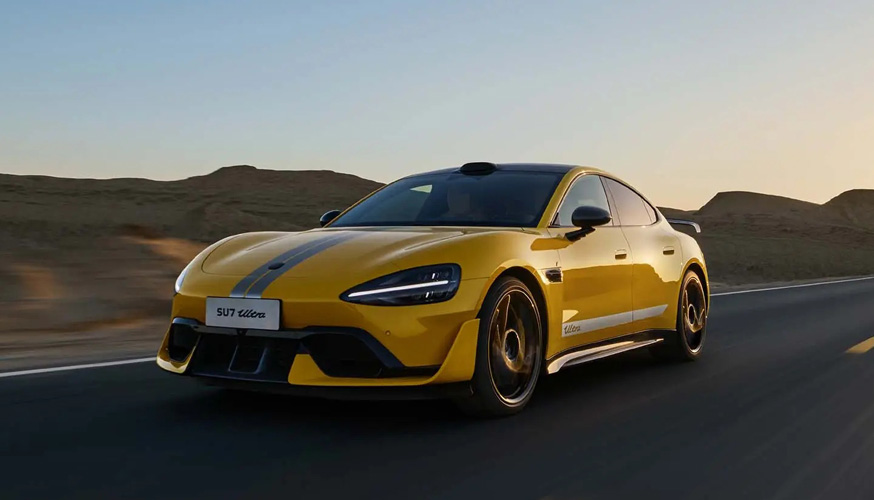
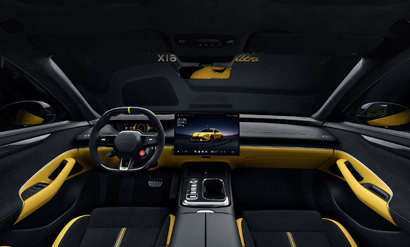
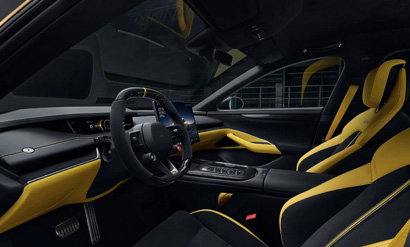
The Xiaomi SU7 is a full-size four-door fastback EV, made by Xiaomi Auto, an electric vehicles subsidiary of the Chinese consumer electronics company Xiaomi. It is the first motor vehicle developed by Xiaomi, manufactured at their plant in Beijing. It was announced on 28 December 2023 and officially released on 28 March 2024 in Beijing, the day Xiaomi began taking orders
According to Xiaomi, 'SU' stands for 'Speed Ultra'.[10][11] 'SU' may also be a reference to the Chinese word 速 (pinyin: sù), just meaning 'speed'. Lei Jun in an online Q&A session where the company founder answered a hundred fan questions,[12] stated: "after internal discussion, we decided the pronunciation should be 苏7 (pronounced IPAc-cmn: su55tɕhi55, or Suchee), it sounds like calling a friend, has a friendly ring to it". He explained that, "domestically, 7 is a common vehicle series positioning number. The size of the model is roughly the same as the BMW 5 Series". The SU7 is available in four versions in total: the SU7, SU7 Pro, SU7 Max and SU7 Ultra.
Xiaomi announced its intent to enter the electric vehicle market in March 2021. Xiaomi founder, chairman and CEO Lei Jun claimed the company would invest 10 billion yuan (US$1.4 billion) into the project. Xiaomi Automobile was established in 2021, based in the Beijing Economic and Technological Development Zone. The company received a permit to produce vehicles from China's National Development and Reform Commission in August 2023.[13][14]
Production of the SU7 started in December 2023. It was introduced on 28 December 2023, with the first display models arriving in stores the next day, and many Xiaomi stores needing to be renovated to accommodate the vehicle.[15][16] The launch press conference was held in Beijing on 28 March 2024 and Nio chairman William Li, XPeng chairman He Xiaopeng, Li Auto chairman Li Xiang, Great Wall Motor chairman Wei Jianjun and BAIC Group chairman Zhang Jianyong attended. The retail price was announced on same day; the standard version costs 215,900 yuan (US$30,408), while Pro and Max versions cost 245,900 yuan (US$34,633) and 299,900 yuan (US$42,239), respectively.
In February 2026, the last Xiaomi SU7 before its facelift rolled off the production line, officially ending production.
ries". The SU7 is available in four versions in total: the SU7, SU7 Pro, SU7 Max and SU7 Ultra.
Xiaomi announced its intent to enter the electric vehicle market in March 2021. Xiaomi founder, chairman and CEO Lei Jun claimed the company would invest 10 billion yuan (US$1.4 billion) into the project. Xiaomi Automobile was established in 2021, based in the Beijing Economic and Technological Development Zone. The company received a permit to produce vehicles from China's National Development and Reform Commission in August 2023.[13][14] Production of the SU7 started in December 2023. It was introduced on 28 December 2023, with the first display models arriving in stores the next day, and many Xiaomi stores needing to be renovated to accommodate the vehicle.[15][16] The launch press conference was held in Beijing on 28 March 2024 and Nio chairman William Li, XPeng chairman He Xiaopeng, Li Auto chairman Li Xiang, Great Wall Motor chairman Wei Jianjun and BAIC Group chairman Zhang Jianyong attended. The retail price was announced on same day; the standard version costs 215,900 yuan (US$30,408), while Pro and Max versions cost 245,900 yuan (US$34,633) and 299,900 yuan (US$42,239), respectively.[17][18] In February 2026, the last Xiaomi SU7 before its facelift rolled off the production line, officially ending production.[19] The SU7 was developed under codename MS11.[20] The design team was led by Chinese designer Sawyer Li, who was poached from BMW. According to Lei Jun, he rejected three design proposals due to durability concerns. Xiaomi benchmarked the car against the Porsche Taycan and Tesla Model S.[21] The sedan is equipped with air suspension with adaptive dampers, an active shutter grille, and an active rear wing with four adjustment levels on higher end models.[15] The company claims the drag coefficient of the SU7, without the rooftop LiDAR module, is the world's lowest at 0.195.[15][21] It also has a 105-litre (3.7 cu ft) frunk in addition to its 571-litre (20.2 cu ft) trunk.[15] The dashboard contains a 7.1-inch digital instrument cluster display, which rotates into a closed position when the car is turned off, displaying a panel with the SU7's silhouette. It also contains a 56-inch augmented-reality heads-up display reflecting off of the windshield, which is capable of displaying navigation guidance. The dashboard also has mounting points for accessories such as dashcams and phone holders. The center console has two wireless charging pads and a control panel with a start/stop button and four rocker switches for HVAC temperature and fan speed, rear spoiler controls, and suspension height adjustment.[22] The doors feature a slot for storing a smartphone upright, and the glovebox is designed to accommodate a 14-inch laptop.[23] The rear seats each have access to a seatback mounting point and charging port for tablets, with iPads also being compatible.[15] There is an optional 4.7-litre (0.17 cu ft) refrigerator located in the back of the center console.[23] The SU7 is equipped with a 16.1-inch touchscreen infotainment center with 3K resolution. The infotainment system is powered by a Qualcomm Snapdragon 8295 system-on-chip and runs Xiaomi HyperOS (小米澎湃OS), based on Android and used in devices such as smartphones, smart wearables, and smarthome devices. It allows for direct mirroring of a Xiaomi smartphones and tablets, connectivity with Xiaomi wearables like the Mi Band, and integration for Xiaomi Smarthome ecosystem devices such as the Mi Robot vacuum cleaner. Other devices are compatible, albeit with less functionality, such as Apple devices with CarPlay.[15] The display also has screw mounting points for optional accessories, including a row of physical switches for HVAC controls and a volume dial with media controls, and a set of auxiliary dial displays, both of which are configurable in the infotainment system. The base, rear-wheel drive SU7 uses a FinDreams-supplied 73.6 kWh LFP blade battery operating at 400 V. It has a single HyperEngine V6 permanent magnet synchronous motor with a power rating of 220 kW (299 PS; 295 hp) and 400 N⋅m (295 lb⋅ft) of torque.[15] It has a kerb weight of 1,980 kg (4,365 lb) and has a range rating of 700 kilometres (435 mi) on the CLTC test cycle. According to Xiaomi, the base SU7 is able to accelerate from 0–100 km/h (0–62 mph) in 5.28 seconds, and speed is limited to 210 km/h (130 mph). The Pro model has the same powertrain, but the battery is upgraded to a 94.3 kWh LFP pack supplied by CATL, and also runs on a 400 V electrical architecture. Range increases to 830 kilometres (516 mi) on the CLTC and top speed is maintained, but the 0–100 km/h (0–62 mph) acceleration time is increased to 5.7 seconds due to a 110-kilogram (243 lb) increase to kerb weight. At the launch in December 2023, Xiaomi said it plans to reveal versions of the Pro with 132 kWh and 150 kWh batteries later in 2025. The all-wheel drive SU7 Max powertrain consists of a front induction motor outputting 220 kW (299 PS; 295 hp) and 338 N⋅m (249 lb⋅ft) and a HyperEngine V6s permanent magnet synchronous motor generating 275 kW (374 PS; 369 hp) and 500 N⋅m (369 lb⋅ft) of torque in the rear, for a total of 495 kW (673 PS; 664 hp) and 838 N⋅m (618 lb⋅ft). It uses a 101 kWh NMC Qilin battery produced by CATL, which runs at 800 V and is assembled in a cell-to-pack format.[15][33][34] The SU7 Max goes from 0–100 km/h (0–62 mph) in 2.78 seconds, has a kerb weight of 2,205 kg (4,861 lb), and a top speed of 265 km/h (165 mph). In September 2021, Xiaomi announced its plan at an internal meeting: to benchmark against Porsche and Tesla and create a pure electric high-performance car. In December of the same year, the SU7 Ultra project was officially launched.[44] In February 2022, Xiaomi held a 21-day meeting. At that time, the SU7 Ultra project was cancelled in order to ensure the success of its first model, the SU7. In May, the project was announced to be restarted. On 29 October 2024, Xiaomi unveiled the high-performance variant, the SU7 Ultra, initially priced at 814,900 yuan (US$114,000). It was officially launched on 27 February 2025 priced significantly lower at 529,900 yuan (US$73,000). While the Racing Package and Nürburgring Limited Edition of SU7 Ultra will be officially released after completing the official lap record on Nürburgring Nordschleife. Xiaomi aims to sell 10,000 units of the SU7 Ultra in 2025, with deliveries starting on 3 March 2025.[49] Xiaomi positions the SU7 Ultra as a road-legal four-door race car. The body receives significant aerodynamic changes, including 17 carbon fibre components. The front features a large front splitter with large vertical endplates, the 1.7 m2 (18 sq ft) roof is fully carbon fibre saving 12 kg (26 lb) of weight, and the rear features a 1,560-millimetre (61 in) wide wing with a 240 mm (9.4 in) chord, a modified rear bumper with vents and an active diffuser, allowing for a claimed 285 kilograms (628 lb) of downforce.[50][51] Other exterior changes include a 24-carat gold Xiaomi emblem at the front end and an optional painted stripe.[52] The interior receives a modified design and comes in three color options, with Alcantara and carbon fibre surfaces, a square-shaped sports steering wheel, and racing-style seats with additional bolstering. Carbon fibre surfaces are used on the front seatbacks, steering wheel, and doorsills, totaling 3.74 m2 (40.3 sq ft), which Xiaomi says saves 12 kilograms (26 lb) of weight.[52] The SU7 Ultra has 5 m2 (54 sq ft) of Alcantara throughout its interior, including on the steering wheel, seats, doors, and dashboard. Xiaomi says that Alcantara was chosen to reduce light reflections and save up to 50% weight compared to conventional leather. The front seats have a 10-point massaging function, all the side windows are double-glazed, and it is equipped with a 25-speaker audio system including speakers placed inside the driver's seat headrest.[51] The infotainment system's software has a unique skin, and there are three artificial vehicle sound options.[50] The Ultra's chassis is based on the standard SU7 and 90.1% of its composition consists of varieties of high-strength steel and aluminium. It also features an FIA-grade roll cage integrated into the chassis.[53] It has 21-inch wheels with Pirelli P Zero 5 tires. It has dual-chamber air suspension, which can independently adjust ride height and spring rate.[51] It is equipped with a carbon ceramic brake system, with 430 mm × 40 mm (16.9 in × 1.6 in) disks and six-piston Akebono calipers in the front, and 410 mm × 32 mm (16.1 in × 1.3 in) disks and four piston calipers in the rear. It has a 100–0 km/h (62–0 mph) stopping distance of 30.8 m (101 ft), and Xiaomi says it can stop from 180 km/h (112 mph) 10 times in succession without losing braking performance.[50][51] The Ultra receives an upgraded sensor suite for its Xiaomi HAD supervised autonomous driving system consisting of 3 LiDARs, 5 mmWave radars, and twelve cameras.[52] The Ultra features a mostly Xiaomi self-developed powertrain, including the debuting HyperEngine V8s motor, electric power electronics, and thermal management system. Xiaomi co-developed the battery pack in collaboration with CATL, and designed the battery controller as part of its contribution. It is designed with track use in mind and uses CATL's new Qilin 2.0 NMC battery cells.[53] The pack is assembled using a cell-to-chassis design, which achieves 77.8% volumetric utilization and allows for a 17-millimetre (0.67 in) decrease in cabin floor height. The battery operates at 897 V and has a maximum peak output of 1,330 kW (1,784 hp; 1,808 PS), or 800 kW (1,073 hp; 1,088 PS) at 20% charge. It can be charged at a rate of up to 490 kW (5.2C), allowing for a 10–80% charge time of 11 minutes.[50][54] It adopts a dual-layer pack cooling design, which Xiaomi claims increases cooling capacity by 60% compared to conventional methods.[53] The SU7 Ultra is powered by three electric motors developed by Xiaomi, which are two HyperEngine V8s and one HyperEngine V6s, reaching a combined power output of 1,138 kW (1,547 PS; 1,526 hp) and total torque output of 1,770 N⋅m (1,305 lb⋅ft). The two V8s motors output 425 kW (578 PS; 570 hp) and 635 N⋅m (468 lb⋅ft) of torque each, and the V6s motor also found in the SU7 Max outputs 288 kW (392 PS; 386 hp) and 400 N⋅m (295 lb⋅ft) of torque.[50] The HyperEngine V8s has a maximum speed of 27,200 rpm, is 98.11% efficient, and has a power density of 10.14 kW/kg, while the V6s can go up to 21,000 rpm.[53] The SU7 Ultra can accelerate from 0 to 100 km/h (62 mph) in 1.98 seconds[a], 0 to 200 km/h (124 mph) in 5.96 seconds, and 0 to 300 km/h (186 mph) in 15 seconds, runs the 0–400 m (0.249 mi) in 9.23 seconds, and has a top speed of over 350 km/h (217 mph).[50][55][56] The SU7 Ultra prototype hit a top speed of 359.71 km/h (224 mph) at the CATARC Yan Cheng Automotive Proving Grounds, which CEO Lei Jun claimed was limited by the test facility.[57] In June 2025, an unmodified SU7 Ultra (with a maximum 1,139 kW (1,527 hp; 1,549 PS) power) lapped the Nürburgring in 7 minutes, 5 seconds.History
Design
SU7 Standard & Pro
SU7 Max
SU7 Ultra


Customer Reviews